Need septic tank pumping services in Lacey?
- Request an estimate in a few minutes
- Compare providers without any pressure
- Pumping, repair and sewer line help
- No obligation to hire
No obligation
Request an estimate and compare
A septic tank collects solids and lets liquid flow out to the drainfield. Over time the solids build up. When the tank gets too full, wastewater slows down, backs up, or pushes into the yard. Pumping empties the tank and gives the whole system room to work again.
Secretaryrob Septic is a referral service. We do not pump tanks ourselves. We connect homeowners in the Lacey area with independent providers in our network, and you request estimates, compare what you hear, and choose at your own pace. This page walks through the warning signs, what a visit looks like, typical costs, and the questions worth asking before you decide.
Gurgling pipes. Drains that sulk. A sour smell by the tank lid or a spongy patch in the yard. Any of these can mean the tank is full.
If sewage is coming up in a tub or floor drain, stop running water, including laundry and dishwashers. Then take a breath. This is a common problem, and local providers handle it often.
Some signs are loud. Others are quiet. Watch for these:
One slow drain is often just a clog. Several signs at once point to the tank.
Backups inside the house, sewage on the ground, or an alarm that keeps sounding all call for faster action. Ask providers about emergency septic cleaning when you request estimates. Many providers can respond quickly, but availability varies, so Request a callback to check provider availability.
While you wait, keep kids and pets away from affected areas and avoid flushing.
Solids that stay in the tank do not break down on their own. They pile up until they travel to the drainfield and clog the soil. That is when a simple pumping job can turn into drainfield repair, which costs far more.
Pumping on a schedule is the cheap kind of maintenance. It protects the part of the system that is hardest to replace.
A common rule is every three to five years. Your own number depends on tank size, how many people live in the home, and how much water you use. A big household with a small tank needs it sooner. A couple in a roomy tank can wait longer.
Garbage disposals add solids, so they shorten the gap. Ask a provider to suggest a schedule after they see your tank.
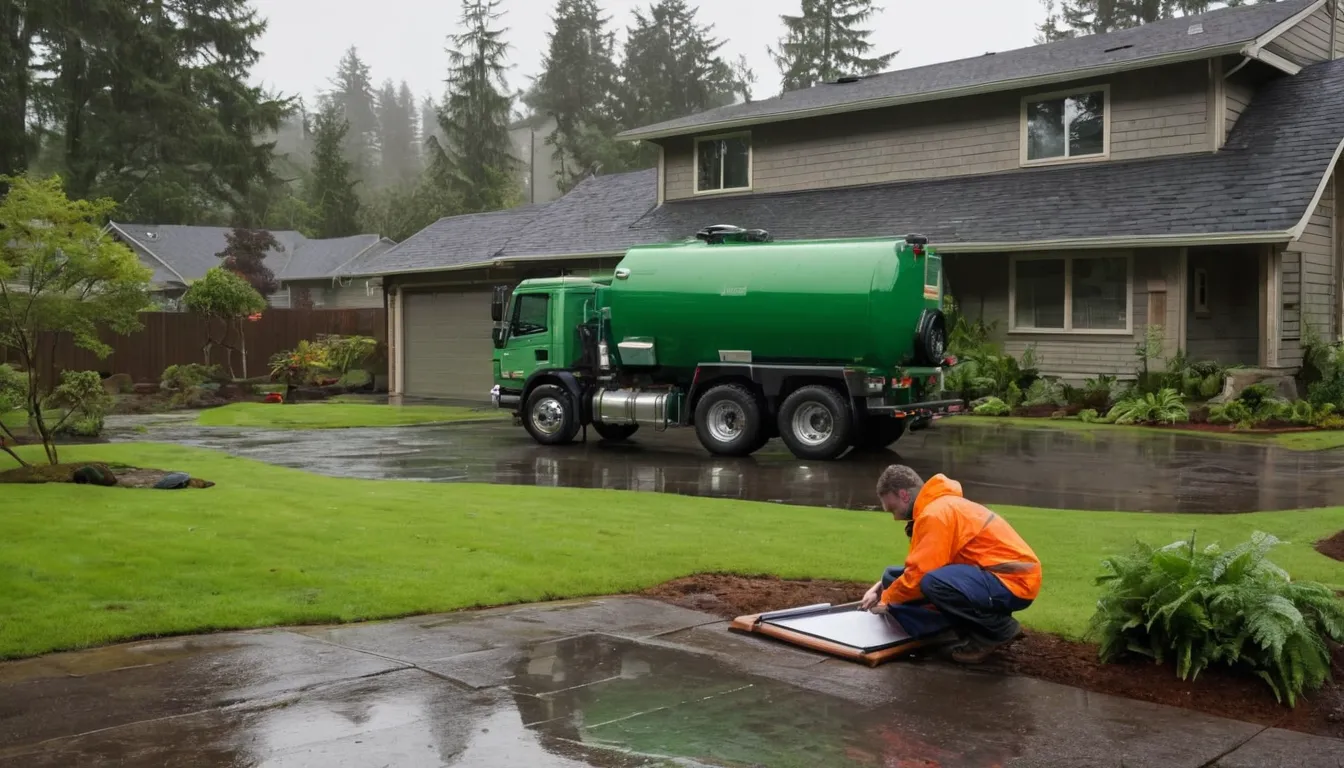
The provider locates and opens the tank lids. A hose pulls out the liquid and the sludge. Many providers then check the baffles, the inlet and outlet pipes, and the water level, which can show whether liquid is flowing back from the drainfield.
Expect a visit of an hour or two for a typical home. If the lids are buried, digging them out can add time.
Pumping is a good moment for a closer look. An inspection can reveal cracked baffles, a worn filter, or signs that the drainfield is struggling. Some providers include a basic check, and others price it separately. Ask which applies.
Keep the paperwork. A dated record helps when you plan the next pumping.
When steady rain soaks the ground for weeks, the drainfield has less room to absorb water. A tank that is already full feels the strain first. Many homeowners find that a pumping before the wettest months gives the system a cushion.
Older wood-frame and craftsman homes may have tanks that have not been checked in years, so a fall visit is a sensible habit.
If your property also has a well, mention it right away. Providers often need to know where the well sits relative to the tank and drainfield. Water well service is a separate trade, but a pumping provider can note concerns, and you may want your well water tested if you see signs of a failing septic system.
Lenders and buyers often ask for proof that the tank has been pumped and inspected. Sellers can ease the sale with a recent record. Buyers can request one before closing. Pumping first makes an inspection more useful, since the provider can see inside an empty tank.
Small habits add up over a rainy winter.
Before you talk to providers, gather what you have: past pumping receipts, a sketch of the tank location, photos of the lids and any wet spots, and a short list of symptoms with dates. Notes and photos ready means faster, clearer estimates. If you ever file an insurance claim, providers can often help document damage, though some policies may cover only sudden damage, so check your policy.
Compare, then decide. A written quote makes that easy.
Providers remove liquid and built-up sludge so your tank has room again and wastewater can flow normally.
Many providers look at inlet and outlet baffles for cracks or wear while the tank is open.
For backups, ask providers about faster visits. Availability varies, so confirm timing when you request an estimate.
Ask for a dated record of the visit. It helps with future schedules, inspections, and home sales.
Prices across the U.S. vary with tank size, access, and how full the tank is. These ranges are typical, not quotes. Get a written estimate from more than one provider before you decide.
| Service | Typical range | Notes |
|---|---|---|
| Routine pumping, standard tank | $300 – $700 | Usually 1,000 to 1,500 gallons |
| Larger tank pumping | $500 – $1,000 | Extra gallons add to the price |
| Emergency or rushed visit | $500 – $1,200 | Availability and pricing vary by provider |
| Septic inspection | $100 – $450 | Sometimes bundled with pumping |
| Riser and lid installation | $300 – $900 | Makes future access easier |
| Effluent filter cleaning or replacement | $100 – $300 | Depends on the filter type |
Tell us what you see: slow drains, odors, wet spots, or backups. Add your address and any photos you have.
Providers in our network reach out with questions and estimates.
Look at price, what is included, timing, and how clearly each provider explains things.
Pick the provider that fits and book a visit. Keep the written record afterward.
Request estimates and see how providers describe the work, pricing, and timing. Nobody pushes you to pick one.
Providers in our network know the local soil and the effects of a long wet season.
Requesting an estimate does not commit you. Take your time and decide at your pace.
Keep photos, notes, and records together so every provider starts with the same facts.
Many homes need pumping every three to five years. Tank size, household size, and water use change that number, so ask a local provider to recommend a schedule after seeing your tank.
Routine pumping often runs about $300 to $700 in the U.S., though larger tanks, hard access, and emergency visits can cost more. Get a written quote before the work begins.
Slow drains throughout the house, gurgling pipes, sewage odors, and soggy grass over the tank or drainfield are common signs. Backups mean you should limit water use and request help.
Tell us what is happening at your home and request an estimate. A local provider in our network can follow up with next steps. There is no obligation.
No obligation